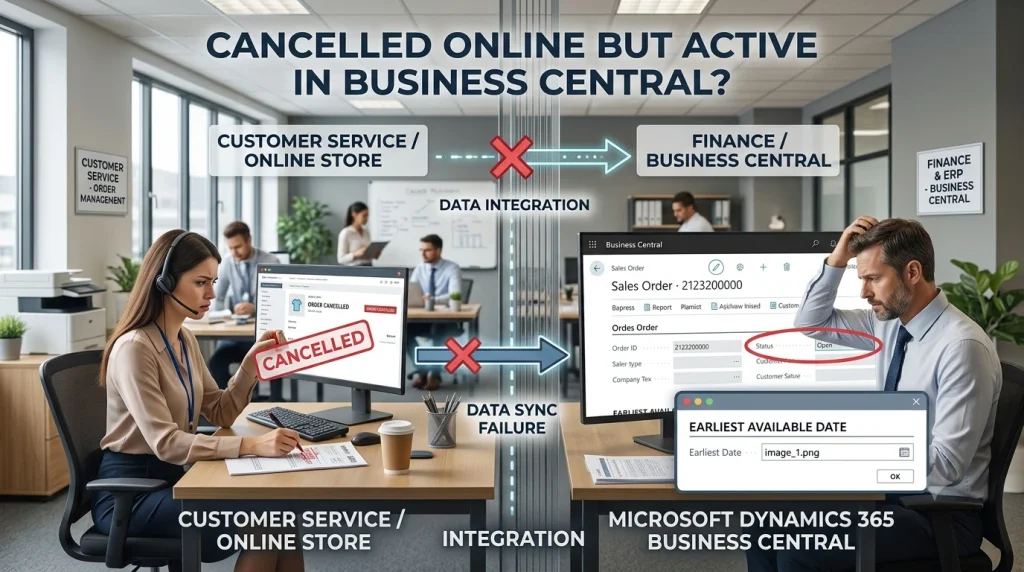
A customer places an order online, receives a confirmation email, and then decides to cancel the order a few minutes later. From the customer’s perspective, the process is complete. The order status changes to “Cancelled” on the website, and they naturally expect the business to stop processing it. But behind the scenes, the story can be very different.
If the cancellation doesn’t reach Microsoft Dynamics 365 Business Central in time, the ERP system may continue treating the order as active. Inventory remains reserved, warehouse teams begin picking items, and customer service representatives end up working with conflicting information. What looks like a simple order cancellation can quickly expose a much larger issue: disconnected systems and ineffective integration.
When Systems Stop Talking to Each Other
Modern businesses operate through a network of connected applications. An order might begin its journey on an e-commerce platform, move into Business Central, trigger inventory updates, initiate fulfillment activities, and eventually generate financial transactions. When each application communicates effectively, the entire process feels seamless.
The challenge begins when important customer actions, such as cancellations, refunds, or order modifications, are not synchronized across all systems. At that point, different departments start relying on different versions of the same transaction. Sales teams may see one status, customer service may see another, and warehouse teams may continue processing an order that no longer exists from the customer’s perspective.
This is one of the reasons integration has become such a critical component of modern ERP environments. The objective is not simply moving information between systems. The objective is ensuring everyone in the organization is working from the same source of truth.
Why Integration Matters More Than Businesses Realize
Many organizations view integration as a technical requirement that exists somewhere in the background. In reality, integration has a direct impact on day-to-day business operations.
When systems fail to communicate effectively, even simple transactions can create unexpected consequences. A cancelled order might continue reserving inventory. A refund may not be reflected in reporting. Customer service teams may spend time manually verifying information across systems. In some cases, operational teams end up performing work that should never have happened in the first place.
As businesses continue expanding their digital channels, those risks increase. More sales channels, more applications, and more customer touchpoints mean more opportunities for information gaps to emerge.
Common Integration Challenges and Their Impact
Organizations that invest in strong integration frameworks often discover that the benefits extend far beyond IT. Accurate information improves collaboration, reduces manual effort, and enables faster decision-making across departments.
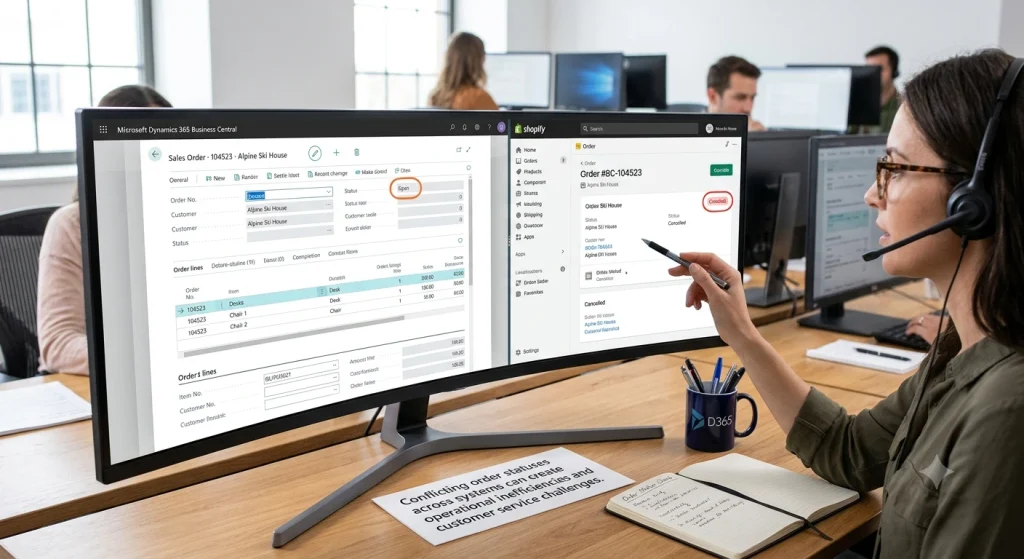
How Business Central Integrations Help Prevent These Issues
A successful integration strategy goes beyond creating records in Business Central. It ensures that important business events continue to flow between systems throughout the entire lifecycle of a transaction.
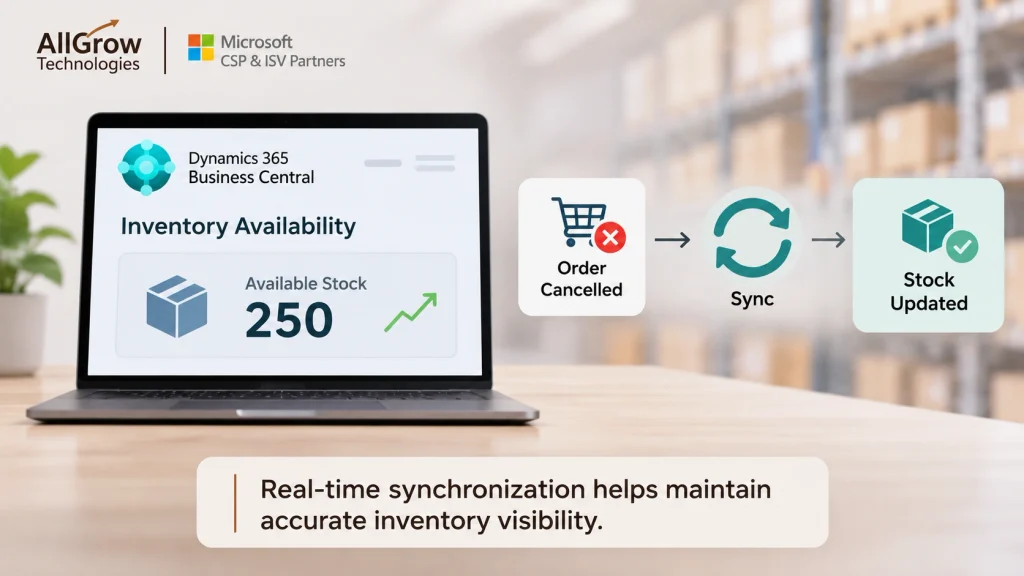
When a customer cancels an order online, that event should automatically update the corresponding sales order in Business Central. Inventory reservations should be released, downstream processes should stop, and every department interacting with that transaction should see the same information.
This level of synchronization creates consistency across the business. Warehouse teams avoid unnecessary work, customer service teams gain confidence in the information they provide, and management benefits from more reliable operational data.
The real value of integration is not technical. It is operational. It allows businesses to scale without creating additional layers of manual reconciliation and process management.
How AI Can Strengthen Integration Monitoring
One of the biggest challenges in managing integrations is identifying issues before they affect operations. In many organizations, integration failures are only discovered after a user reports a problem.
Artificial intelligence has the potential to change this approach.
Instead of waiting for someone to notice that an order cancellation never reached Business Central, AI-powered monitoring can identify unusual patterns, failed synchronization attempts, and inconsistencies between systems much earlier. This allows teams to investigate issues proactively rather than reacting after operational disruptions occur.
The goal is not to replace integration platforms or ERP systems. Rather, AI provides an additional layer of visibility that helps organizations maintain confidence in their connected processes. By highlighting anomalies and exceptions sooner, businesses can reduce manual effort and respond more quickly when issues occur.
How Allgrow Addresses These Business Challenges
Recently, we worked with a mid-sized retail and distribution company that had integrated its e-commerce platform with Microsoft Dynamics 365 Business Central. While online orders were synchronizing successfully, some order cancellations were not being reflected correctly in Business Central.
As a result, cancelled orders continued to appear as active sales orders, causing inventory to remain reserved and warehouse teams to spend time processing orders that should have already been stopped. After reviewing the integration workflows and transaction history, our consultants identified a gap in how cancellation events were being synchronized between systems. Once the integration logic was adjusted, order statuses were updated consistently across platforms, giving sales, operations, and customer service teams access to the same real-time information.
Organizations facing similar challenges often discover that the issue is not the ERP system itself, but how effectively their business applications communicate with one another. Leveraging our expertise in Dynamics 365 Business Central integrations and business process optimization, we help organizations identify synchronization gaps, improve data flow between systems, and create more reliable operational processes. Scenarios like this demonstrate that integration is about much more than simply connecting applications. It is about ensuring every department works with accurate, timely, and reliable data.
At Allgrow Technologies, we help organizations integrate Dynamics 365 Business Central with e-commerce platforms, CRM systems, third-party applications, and operational workflows to improve visibility, reduce manual effort, and support sustainable business growth.
Final Thoughts
A cancelled online order may seem like a minor event, but when systems fail to communicate effectively, that single action can create inventory issues, unnecessary operational costs, reporting inaccuracies, and customer frustration.
The problem is not the cancellation itself. The problem is ensuring that every system involved in the process receives the same information at the right time.
For organizations using Microsoft Dynamics 365 Business Central, effective integration is far more than a technical requirement. It is a business necessity. As companies continue expanding their digital ecosystem, the ability to synchronize information accurately across systems will play a critical role in operational efficiency, customer satisfaction, and long-term growth.