
1. The Enterprise Support Vacuum for Microsoft Dynamics NAV
Across North America, thousands of profitable wholesale, distribution, and manufacturing enterprises continue running on-premises Microsoft Dynamics NAV (versions 2013 R2, 2015, 2016, 2017, and 2018). These environments represent millions of dollars in tailored C/AL customizations, tightly woven automated warehouse scanners, and high-frequency EDI pipelines that process tens of millions of dollars in monthly revenue.
However, enterprise leaders face a harsh industry reality: traditional Microsoft implementation partners have largely abandoned their legacy NAV practices. Senior C/AL engineers have been reassigned to cloud sales, leaving legacy clients supported by junior helpdesk triage or forced into hasty, multi-million-dollar cloud migration quotes before their business is ready.
When a critical sales posting deadlocks on a busy Monday morning or the automated job queue hangs on month-end inventory valuation, an email response promise of "24 to 48 business hours" is unacceptable. Enterprises require true SLA-backed engineering coverage that stabilizes their existing infrastructure while preparing a disciplined modernization roadmap on their own schedule.
2. The 4-Tier Support Hierarchy: Incident Resolution Mechanics
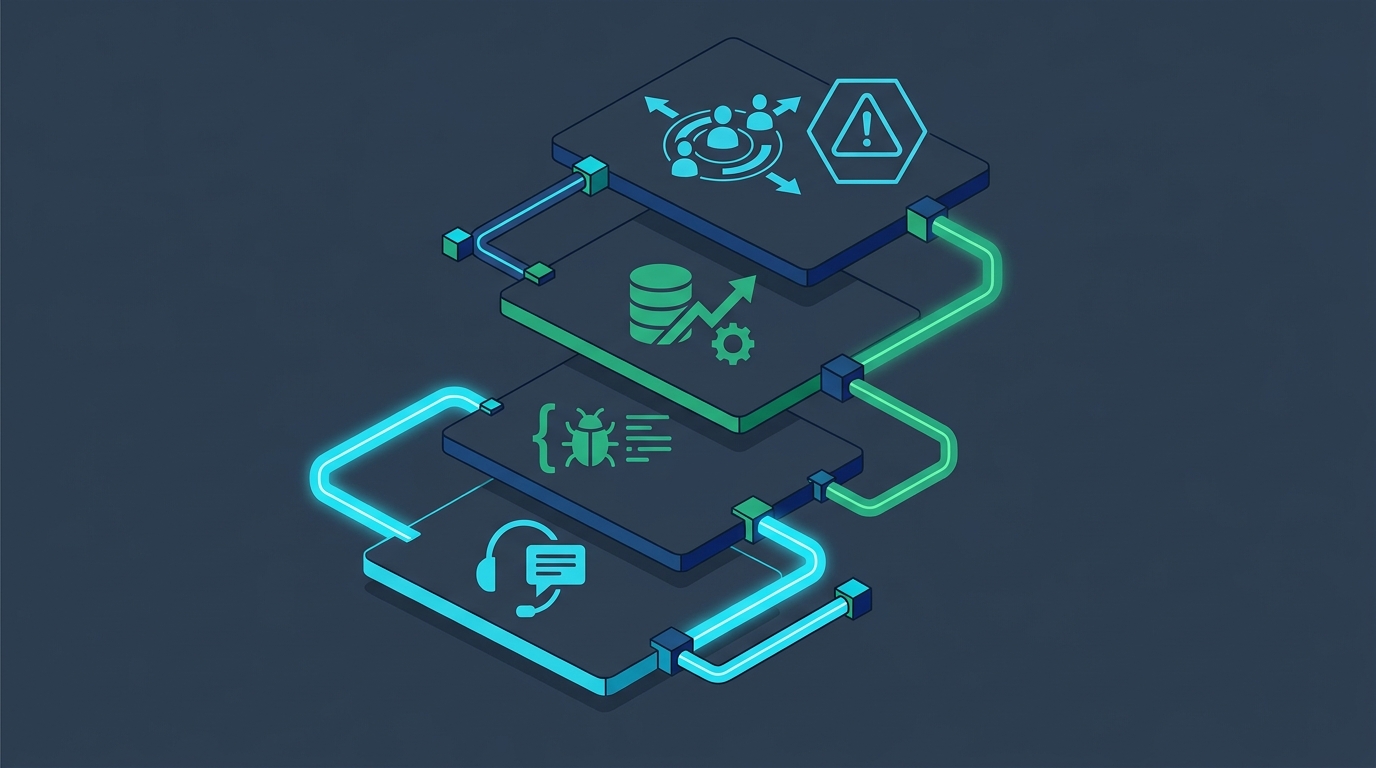
Enterprise ERP support cannot function as a generic ticketing inbox. It requires an organized escalation hierarchy where database contention, broken C/AL codeunits, and EDI transmission faults are routed immediately to domain experts:
| Support Tier | Focus Scope & Responsibilities | SLA Target Response | Engineering Profile |
|---|---|---|---|
| Tier 1: Functional Helpdesk | User access provisioning, posting group exceptions, report filtering, and daily user operational guidance. | < 30 Minutes | Certified Dynamics NAV / BC Functional Consultants |
| Tier 2: Code & Logic Care | Debugging C/AL codeunits, AL table extensions, broken job queues, and third-party EDI integration failures. | < 1 Hour | Senior C/AL & AL Full-Stack ERP Developers |
| Tier 3: Database & Deadlocks | SQL Server lock escalation, DMV profiling, AlwaysOn failover management, and batch posting optimizations. | < 15 Minutes (P1) | Principal SQL Database Administrators & Kernel Specialists |
| Tier 4: Microsoft Bridge | Kernel-level platform bugs, service update regression management, and Microsoft Premier Support dispatch. | Prioritized Liaison | Designated Enterprise Solution Architect |
3. The Engineering Mechanics of SQL Deadlock Remediation
In high-transaction Dynamics NAV environments, the most common operational failure is the dreaded SQL 12005 error: "The transaction could not be completed because another user has locked the table."
When multiple users concurrently post sales invoices, ship warehouse lines, and run automated inventory cost adjustments, standard NAV table locking behavior escalates from row-level locks to full table locks. Generic IT vendors attempt to solve this by throwing more RAM or faster SSDs at the database server, which rarely resolves lock contention.
Deadlocks occur when two SQL transactions hold exclusive locks on separate resources and each requests a lock on the other's resource. No amount of CPU or RAM eliminates a circular lock dependency. The solution requires rewriting locking order in C/AL code and tuning SQL index coverage so transactions complete in milliseconds rather than seconds.
Allgrow's database tuning practice deploys a proven four-step remediation protocol:
- Dynamic Management View (DMV) Lock Profiling: We deploy lightweight SQL extended event sessions to capture the exact deadlock graphs, identifying the conflicting C/AL codeunits, SQL SPIDs, and locked index pages.
- Covering Non-Clustered Indexes: We engineer targeted composite indexes on high-contention tables (such as Sales Line, Item Ledger Entry, and Value Entry). By covering query predicate columns, SQL queries execute index seeks without triggering full clustered index scans.
- Read Committed Snapshot Isolation (RCSI): Where appropriate, we enable RCSI on SQL Server databases, allowing reporting queries to read historical row versions from TempDB without blocking concurrent ledger updates.
- Transaction Duration Minimization: We refactor long-running C/AL codeblocks, isolating external web service calls and PDF generation outside of database transaction boundaries.
4. Generic MSP vs. Dedicated Enterprise NAV/BC Partner
Contracting a generic IT Managed Service Provider (MSP) or relying on ad-hoc freelancer billing introduces high operational fragility into mid-market companies:
| Operational Dimension | Generic MSP / Ad-Hoc Vendor | Allgrow Technologies SLA Practice |
|---|---|---|
| Critical Incident Response | Best-effort 24 to 48-hour email queues; zero financial SLA penalties. | Contractual 15-minute response SLA for P1 production halts with 24/7 coverage. |
| C/AL & AL Code Proficiency | Little to no in-house C/AL developers; subcontractor outsourcing delays. | Dedicated in-house C/AL and modern AL development teams with 15+ years experience. |
| Proactive Telemetry | Reactive; waits for users to report broken posting queues or corrupt batches. | Automated job queue monitoring, SQL DMV tracking, and automated exception alerts. |
| Regulatory Updates | Manual, billable discovery to assess yearly IRS 1099 or banking NACHA compliance. | Routine quarterly compliance patch delivery built into regular support retainers. |
| Cloud Upgrade Strategy | Aggressive push to scrap existing systems for immediate re-implementation. | Pragmatic stabilization; pre-cleansing code to ensure cost-effective cloud readiness. |
5. Pre-Cleansing Code for Future Business Central Modernization
Effective managed support does not trap clients in legacy software. Instead, it systematically lowers the cost and risk of eventual cloud modernization:
- Dead Code Deprecation: We audit all historical C/AL modifications, cataloging orphaned tables and unused reports to eliminate unnecessary migration baggage.
- Event-Driven Decoupling: Where custom logic interacts with core standard tables, we refactor code toward publisher-subscriber event patterns that mirror modern Business Central AL extensions.
- Virtual Table & Power Platform Offloading: Rather than continuing to build heavy custom screens in legacy C/AL, we construct lightweight Power Apps and Power Automate workflows that connect securely to legacy NAV and modern Business Central interchangeably.
6. Frequently Asked Questions
What is the typical SLA response time for critical Dynamics NAV or Business Central production halts?
Allgrow Technologies provides a guaranteed 15-minute response SLA for Priority 1 (P1) production stoppage incidents, backed by direct access to senior Level-3 NAV/BC kernel engineers and database tuning specialists.
Can you remediate frequent SQL table locks and deadlocks in older Dynamics NAV versions without upgrading?
Yes. By utilizing SQL Server Dynamic Management Views (DMVs), non-clustered covering indexes on high-traffic posting tables, Read Committed Snapshot Isolation (RCSI), and targeted C/AL transaction refactoring, we routinely eliminate 90% to 95% of peak-hour posting freezes on NAV 2013 through NAV 2018 systems.
How does managed support protect legacy C/AL customizations while preparing for cloud migration?
Our engineering team documents and refactors existing C/AL codeunits, segregating proprietary business rules from core standard tables. This eliminates current performance bottlenecks while pre-cleansing logic for upgrade-safe AL extension packaging when the business transitions to Business Central.
What coverage windows are supported for North American enterprises?
We provide true follow-the-sun 24/7/365 coverage with designated US Eastern, Central, and Pacific working-hours lead engineers, ensuring immediate handoffs and continuous coverage for high-volume night and weekend shifts.